
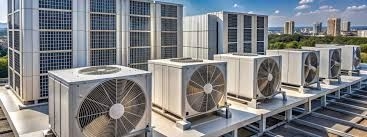
Non-Invasive HVAC Acoustic Monitoring
Specifications
Details
Fan Belt & Bearing Predictive Maintenance: Non-Invasive HVAC Acoustic Monitoring
Within the centralized Air Handling Units (AHUs) keeping premium commercial high-rises, healthcare complexes, and data centers running smoothly across Kuala Lumpur and Selangor, mechanical reliability is directly tied to structural dynamics. While traditional vibration monitoring tracks gross machine movement, and thermal mapping flags existing friction heat, Non-Invasive HVAC Acoustic Monitoring—utilizing both audible and airborne ultrasonic spectrum analysis—acts as an early-warning diagnostic system. It captures the high-frequency sound signatures emitted by microscopic mechanical defects weeks before they cause physical damage, generate heat, or trigger vibrational spikes.
Relying on standard audible checks by technicians or waiting for an asset to emit distinct rattling and screeching introduces severe operational risks. By the time a bearing or drive belt becomes loud enough to be heard by the human ear, it has transitioned into an advanced phase of mechanical wear.
Unchecked friction and harmonic energy rapidly wear down mounting frames, warp fan shafts, and lead to sudden, expensive component failures that completely halt your building's ventilation.
As a specialized mechanical installation contractor—focusing strictly on precision site execution and absolutely no fabrication—EKG (Malaysia) SDN BHD implements engineering-grade Non-Invasive HVAC Acoustic Monitoring protocols to decode acoustic stress signatures and protect your ventilation infrastructure.
The Physics of Acoustic Emission and Ultrasonic Diagnostics
Every moving part inside an operational AHU drivetrain—the motor rotor, the fan bearings, and the tracking V-belts—generates specific acoustic signatures. When components operate normally, they emit low-energy, predictable background frequencies. However, when friction increases or micro-structural damage occurs, the mechanical interaction releases stress waves that travel through the air and the machine's structure.
1. Airborne and Structure-Borne Ultrasonics
Human hearing is limited to frequencies between $20\text{ Hz}$ and $20\text{ kHz}$. The earliest indicators of mechanical degradation, such as lubrication breakdown or sub-surface bearing cracks, occur in the ultrasonic spectrum between $20\text{ kHz}$ and $100\text{ kHz}$.
These high-frequency, short-wavelength acoustic emissions do not travel far and are highly localized. This localization allows specialized acoustic sensors to pinpoint the exact component experiencing friction, entirely unaffected by the loud, low-frequency background hum of the motor or nearby air turbulence.
2. Isolate Lubrication Friction from Mechanical Damage
Acoustic monitoring excels at distinguishing between a bearing that simply needs grease and one that has sustained permanent structural damage.
When a bearing lacks lubricant, the rolling elements enter a state of boundary lubrication, rubbing against the dry raceways and generating a continuous, high-amplitude white noise signal in the $30\text{ kHz}$ spectrum. Conversely, if the bearing has a physical crack or pit, the rolling elements striking that defect create distinct, periodic acoustic spikes or "impact transients."
Technical Decoding: Isolating Component Failures via Acoustic Signatures
Our technical teams deploy precision acoustic receivers and heterodyne processors—which convert ultrasonic signals into audible frequencies—to identify and track specific failure vectors across your air handler's moving parts.
1. Advanced Bearing Degradation (Microscopic Flaking)
As internal bearing components develop sub-surface fatigue and initial pitting, they emit specific, high-frequency sound waves every time a ball rolls over a defect. These acoustic spikes correspond to exact Bearing Characteristic Frequencies, such as BPFO (Ball Pass Frequency Outer Race) or BPFI (Ball Pass Frequency Inner Race). Capturing these acoustic emissions allows EKG to flag bearing wear months before it shows up on standard low-frequency vibration velocity meters.
2. Frictional Belt Slip and Pulley Groove Wear
Power transmission relies entirely on the friction generated between the angled sidewalls of the V-belt and the matching pulley grooves. As a belt stretches, low tension leads to continuous frictional belt slip. This slip generates high-frequency acoustic squeaks and frictional micro-shocks as the belt catches and releases within the sheave.
Acoustic sensors detect this slipping energy instantly, preventing it from transforming into wasted thermal energy that glazes the belt walls and cuts downstream airflow ($q_v$).
3. Aerodynamic Fan Turbulence and Blade Anomalies
When fine dust or biological grime bakes onto centrifugal fan blades unevenly, it alters the blade profiles and creates boundary-layer separation. This aerodynamic disruption produces distinct acoustic pressure fluctuations, known as Blade Pass Frequencies:
Where $N$ is the number of fan blades. Acoustic monitoring flags these pressure waves early, identifying aerodynamic choking and unbalance before the induced forces warp the fan shaft or damage the bearing blocks.
The EKG Calibration and Correction Protocol
Once acoustic data flags an underlying mechanical anomaly, our specialized site installation teams transition into precision calibration mode to restore mechanical balance:
1. Coplanar Laser Alignment
When acoustic scans show uneven belt tracking or axial bearing friction, EKG deploys advanced dual-laser alignment arrays mounted directly into the pulley sheave grooves. We adjust the motor base position vertically and horizontally until the laser paths achieve absolute coplanar alignment, removing the destructive axial thrust loads tearing up your bearing housings.
2. Sonic Tension Calibration
To stop belts from slipping without over-tightening them and overloading the bearings, EKG uses digital sonic tension meters. By plucking the belt span, the tool reads the natural frequency of the vibration wave and calculates the exact static belt tension based on the belt's mass and span length:
We adjust the motor base precisely until the tension hits the manufacturer's exact design specifications, preventing power-robbing slip and bearing overload.
3. Calculated Grease Volume Delivery
If acoustic monitoring indicates initial lubrication film breakdown, EKG calculates the exact volume of grease required for that specific bearing model ($G = 0.005 \times D \times B$). We deliver this exact dose using calibrated grease guns and premium polyurea lubricants, avoiding the thermal traps of over-greasing and grease churning.
The EKG Execution Standard
When EKG implements a Non-Invasive Acoustic Monitoring program, we evaluate the entire air handler enclosure to ensure your ventilation infrastructure conforms to overlapping national codes:
Direct Alignment with the Energy Efficiency and Conservation Act (EECA) 2024
Under the statutory mandates of the Energy Efficiency and Conservation Act (EECA) 2024, designated commercial and industrial buildings in Malaysia must maintain strict energy efficiency benchmarks, monitor their power draw, and lower their Building Energy Index (BEI).
Eliminating power-robbing belt slip, correcting shaft misalignment, and stopping bearing friction directly optimizes the mechanical efficiency of your AHU's drivetrain ($\eta_{\text{drive}}$). When the motor no longer wastes expensive electrical energy fighting internal friction and acoustic stress, it draws significantly fewer kilowatts while delivering its full design airflow, ensuring total regulatory compliance.
Eliminating "The Sponge Effect"
While optimizing mechanical drivetrains, we also check for environmental and aerodynamic risks inside the air handler casing. Legacy AHUs frequently rely on internal fiberglass insulation. If moisture blowing off the cooling coils saturates this lining, it acts like a giant sponge, rotting from the inside out and releasing toxic mold spores into the moving air stream.
As the insulation sags, it enters the air path, restricting aerodynamic flow, increasing internal system static pressure, and introducing erratic aerodynamic loads that can trigger fan unbalance. If our installation teams flag degraded insulation during the acoustic audit, we execute complete physical removal. We strip the panels down to bare steel, apply our 165°C Thermal Decontamination to the raw casing, and install smooth, Fiber-Free Closed-Cell Insulation. This creates a permanent, hydrophobic internal skin that prevents mold cultivation while optimizing internal airflow dynamics.
The Hardwired BOMBA Override
Your mechanical, efficiency, and monitoring upgrades must never compromise building safety. During our predictive tuning and acoustic tracking routines, our engineers manually trip the hardwired interlocks connected to your local Fire Alarm Monitoring System. We guarantee that upon receiving an emergency trigger, the AHU instantly bypasses all automated environmental and digital software loops to execute an immediate smoke-spill ventilation sequence or complete containment shutdown in full compliance with BOMBA safety protocols.
Secure Your Drivetrain Reliability
Don't wait for structural vibrations to fracture your motor mounts, dry bearings to seize your fan shafts, or drivetrain friction to inflate your monthly TNB energy bills.
Contact EKG (Malaysia) SDN BHD today to schedule an engineering-grade Non-Invasive HVAC Acoustic Monitoring service for your facility. Let our specialized site installation teams decode your mechanical data, protect your machine life, and optimize your ventilation infrastructure with elite, data-backed execution.
View more about Non-Invasive HVAC Acoustic Monitoring on main site