
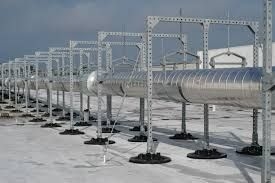
Seismic-Rated Duct Support Engineering
Specifications
Details
Seismic-Rated Duct Support Engineering by EKG M&E Sdn Bhd
In 2026, Seismic-Rated Duct Support Engineering has become a critical focus for resilient infrastructure in Malaysia. While Peninsular Malaysia is traditionally considered a low-seismic zone, modern building codes and the Energy Efficiency and Conservation Act (EECA) 2024 now emphasize "Mechanical Resilience." For high-value assets in Kuala Lumpur and Selangor, seismic bracing is no longer optional—it is a mandatory life-safety requirement to ensure that HVAC systems, especially smoke-spill and fire-rated ducts, remain operational during and after a structural event.
At EKG M&E Sdn Bhd, we apply 34 years of mechanical engineering expertise to the specialized rigging and mounting of seismically braced systems. We ensure your air distribution is a "Fixed Asset" that supports a 5-Star Energy Intensity Label through structural stability.
1. The Engineering Logic: Restraint vs. Support
Standard duct hanging is designed only to support "Dead Weight" (gravity). Seismic engineering adds "Lateral and Longitudinal Restraint" to manage the horizontal forces of an earthquake.
-
Managing Sway: During a seismic event, unbraced ductwork acts like a giant pendulum. This sway can cause the duct to crash into fire sprinklers, electrical busbars, or structural beams, leading to catastrophic secondary damage.
-
Component Importance Factor ($I_p$): For critical facilities like hospitals or data centers, the HVAC system is assigned a high importance factor. This means the ductwork must not only stay attached to the ceiling but must remain functional to provide life-saving ventilation.
-
Maintaining the BEI: Seismic bracing prevents the "Joint Stress" caused by minor building tremors or mechanical vibrations. By keeping joints perfectly aligned and airtight, we prevent the "Energy Bleed" that inflates your Building Energy Index (BEI).
2. Specialized Seismic Bracing Systems
We utilize industrial-grade seismic hardware tailored to the weight, pressure, and location of your ductwork:
A. Rigid Bracing (Strut-Based)
For main headers and heavy-gauge industrial ducts, we utilize high-strength steel struts arranged in a "V" or "K" configuration. These are anchored directly into the building's structural slab using seismically rated expansion anchors.
B. Cable Bracing (Tension-Based)
For "Exposed Architecture" or areas with complex ceiling services, we utilize pre-stretched aircraft cables with specialized seismic "Grip-Lock" connectors. These provide the necessary restraint while offering a cleaner, more minimalist aesthetic.
C. Seismic Snubbers and Isolators
In areas where vibration isolation is also required, we utilize "Seismic Snubbers." These allow for normal thermal expansion and mechanical vibration but "lock" the duct in place when sudden, high-force lateral movement occurs.
3. Rigging & Installation Protocol
Seismic rigging requires high-precision anchorage and an understanding of "Force Distribution":
-
Seismic Calculation Reports: Every bracing point is determined by an engineered calculation that accounts for the duct's weight, the building's height, and the local seismic zone factor.
-
Transverse and Longitudinal Placement: We rig Transverse braces to prevent side-to-side sway and Longitudinal braces to prevent the duct from sliding back and forth along its run.
-
Non-Clash Coordination: Seismic braces often cross other services. We use 3D modeling to ensure our braces do not penetrate or interfere with fire protection or electrical systems.
4. Why Seismic Resilience is Essential for 2026
-
Lowering TNB Maximum Demand: Stable, seismically braced ductwork does not suffer from "Fatigue Cracking" at the flanges. By maintaining 100% airtightness over the building's life, we flatten your energy profile and reduce peak power charges.
-
BOMBA & Life Safety Compliance: For smoke-spill and fire-rated risers, seismic bracing is a mandatory requirement for your annual Fire Certificate (FC) renewal. If the duct falls, the building’s primary life-safety path fails.
-
Asset Longevity: Professional seismic rigging prevents the long-term joint degradation caused by building "sway" in high-rise towers. Our systems are engineered for a 30+ year life cycle.
Why Choose EKG M&E Sdn Bhd?
-
34 Years of Engineering Depth: Based in KL, we have rigged support systems for some of the city's most complex infrastructure. We understand that in modern high-rises, "Stability is Efficiency."
-
Turnkey Documentation: You receive a comprehensive digital dossier, including seismic calculation reports, anchor pull-test logs, and "As-Rigged" shop drawings.
-
BIM & Digital Twin Integration: We update your 3D facility models with the final seismic brace coordinates, providing your maintenance team with a complete map of your building's mechanical resilience.
Is your facility's air distribution system a secure asset or a floating liability? Contact EKG M&E Sdn Bhd today for specialized seismic-rated duct support engineering and secure the 5-star performance of your infrastructure.
View more about Seismic-Rated Duct Support Engineering on main site