
Details
Mold Resistant Air Ducts | 2026 Humidity Defense
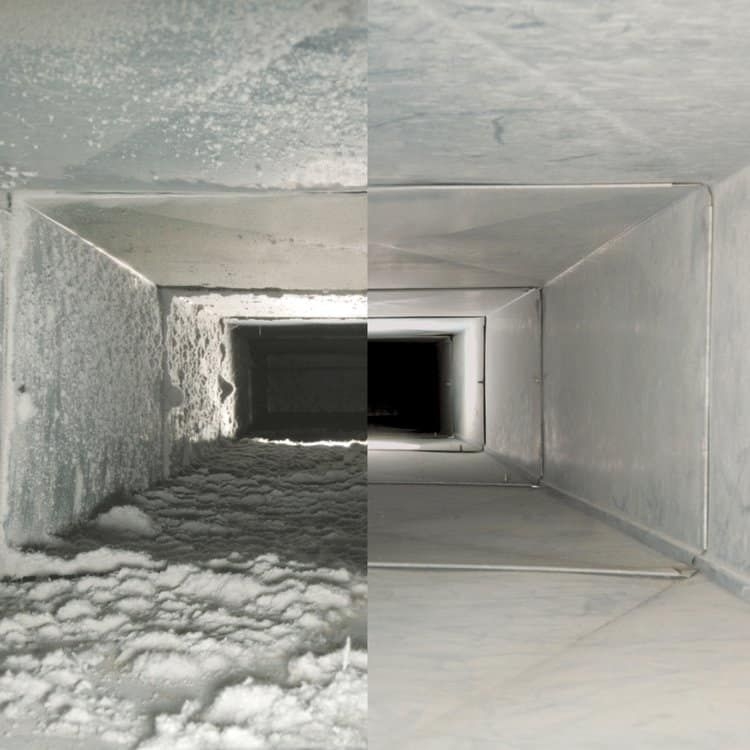
In 2026, Mold Resistant Air Ducts are a mandatory engineering response to Malaysia's high-humidity environment. Under the March 2026 DOSH ICOP IAQ and the EECA 2024, managing biological growth in the "Fresh Air Injection" path is a legal prerequisite for a building's Occupancy Permit. In a climate where Relative Humidity (RH) frequently exceeds 80%, standard ductwork can become a "Mold Factory" within weeks of commissioning.
At EKG M&E, with 34 years of mechanical depth, we provide multi-layered defenses that ensure your duct surfaces remain biologically inert, even in the most challenging tropical conditions.
1. 2026 Compliance: The 70% RH Threshold
The 2026 DOSH updates identify Relative Humidity above 70% as the primary trigger for mold germination. In Malaysia, "Micro-Climes" inside ductwork often hit this threshold due to condensation.
-
ISO 22196 Surface Efficacy: We specify ducting and coatings tested to ISO 22196 (or JIS Z 2801), which proves a 99.9% inhibition of fungal species like Aspergillus niger and Penicillium.
-
The 500 cfu/m³ Limit: Mold-resistant ducts are essential for keeping your Total Fungal Count (TFC) below the strict 2026 federal limits.
-
Audit-Ready Materials: All 2026-compliant mold-resistant ducts must carry a Material Traceability Certificate verifying their antimicrobial properties for the building's Registered Energy Manager (REM).
2. Active Silver-Ion & Polymer Technology
In 2026, "Mold Resistant" doesn't just mean a smooth surface; it means an Active Bio-Static Shield.
-
Moisture-Activated Ions: We utilize coatings embedded with Silver (Ag+) and Zinc ions. These ions remain dormant when the duct is dry but activate the moment humidity spikes, puncturing the reproductive spores of mold before they can take root.
-
Hydrophobic Finishing: Modern mold-resistant ducts feature a "Lotus Effect" surface. This prevents "Micro-Pooling" of condensation, depriving mold spores of the standing water they need to grow.
-
Non-Nutrient Substrates: We have moved away from traditional "Duct Board" or porous liners. Our 2026 standard uses Closed-Cell Polyethylene or Smooth-Wall Stainless Steel, which provide no organic "food" for mold to consume.
3. EECA 2024: Friction & The "Cube Law"
Under the EECA 2024, a moldy duct is an energy-wasting duct. Fungal "Biofilm" creates surface turbulence that forces your fans to work harder.
-
Restoring Laminar Flow: The ultra-smooth, mold-resistant surface reduces "Skin Friction" by up to 20% compared to oxidized galvanized steel.
-
The Cube Law Advantage: Lower resistance allows your Variable Speed Drive (VSD) to deliver the mandatory 10 l/s per person of fresh air at a lower fan speed.
-
The Math: Following the Cube Law, a 20% reduction in fan speed results in a nearly 50% reduction in power consumption, directly improving your Building Energy Index (BEI).
4. 2026 Mold Resistance Matrix
| Feature | Standard Galvanized Duct | 2026 Mold-Resistant Duct |
| Surface Reaction | Passive (Supports Growth) | Active (Pathogen Neutralizing) |
| Moisture Handling | Pitting & White Rust | Hydrophobic (Water-Repellent) |
| Material Life | 10–15 Years | 25+ Years (Corrosion Proof) |
| Airflow Efficiency | Standard | Enhanced (Low-Friction Surface) |
| Audit Status | High Risk | Audit-Ready (DOSH 2026) |
Why Trust EKG M&E for Mold Resistance?
-
34 Years of Engineering Depth: We understand the "Psychrometric Dew Point." We don't just provide the duct; we ensure the external insulation is thick enough to prevent the internal "sweating" that feeds mold.
-
Audit-Ready Documentation: We provide the ISO 22196 Certs and BMS-linked Humidity Logs required for your 2026 federal safety audits.
-
Turnkey Protection: From initial Bio-Risk Assessment to final VSD-Energy optimization, we manage the entire "Injection Path" hygiene.
View more about Mold Resistant Air Ducts on main site