
Details
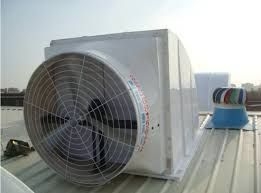
Roof Mounted Fresh Air Fans | 2026 High-Volume Injection
In 2026, Roof Mounted Fresh Air Fans (often called Rooftop Supply Units) are the primary intake point for modern "Fresh Air Injection" systems in Malaysia. Under the EECA 2024 and DOSH ICOP IAQ 2026, these units must act as high-efficiency gatekeepers, delivering the mandatory 10 liters per second (l/s) per person while maintaining the building's Energy Intensity Label.
At EKG M&E, with 34 years of engineering depth, we specify and maintain rooftop systems that leverage vertical height to draw in the cleanest available air, far above street-level vehicle emissions.
1. 2026 Compliance: The Clean Air Advantage
Drawing air from the roof provides a natural "Pre-Filter" effect by avoiding ground-level dust and carbon monoxide. However, 2026 standards add specific technical layers:
-
Source Purity: Per DOSH 2026, roof fans must be located at least 10 meters away from cooling towers and exhaust flues to prevent "Short-Circuiting" (re-injecting contaminated air).
-
High-Static Injection: Because these fans must push air down long vertical risers through MERV-13 filters, we utilize Centrifugal Upblast or Inline Axial designs with high static pressure capabilities.
-
Positive Pressure Logic: We balance these fans to ensure the building stays under Positive Pressure. This pushes air out of door gaps, acting as an "Air Shield" that keeps KL’s 90% humidity from leaking into the lobby.
2. EECA 2024: The "Cube Law" in the Sky
The EECA 2024 (enforced Jan 2025) makes energy efficiency a legal requirement for large motors. A roof fan running at 100% speed 24/7 is a major financial liability.
-
VFD Integration: We equip all rooftop fans with Variable Frequency Drives (VFDs) housed in IP66-rated weatherproof enclosures.
-
The Cube Law Advantage: Fan power consumption is proportional to the cube of its speed.
-
The ROI: By using a VFD to slow the roof fan by just 20% during low-occupancy hours, you reduce its electricity usage by nearly 50%. This is the most effective way to lower your Building Energy Index (BEI).
3. Mechanical Health: FFT & Weatherproofing
Roof fans are exposed to the harshest conditions: direct sun, monsoon rains, and high wind loads.
-
FFT Vibration Audit: We use Fast Fourier Transform (FFT) analysis during commissioning. Since roof fans are often mounted on "Curbs," any vibration can travel through the building's structure. We identify and "program out" resonant frequencies in the VFD.
-
Corrosion Defense: In Malaysia’s tropical climate, we specify marine-grade aluminum or powder-coated galvanized steel housings. We also ensure "Drainable-Blade" louvers prevent rain ingress during heavy storms.
-
Maintenance Access: 2026 safety standards require secure walkways and fall-protection anchors for technicians. We perform monthly inspections on belt tension and bearing lubrication to prevent catastrophic failure.
4. 2026 Roof Fan Service Matrix
| Feature | Traditional Roof Fan | 2026 Smart Roof Fan |
| Motor Type | Standard AC | EC Motor or VFD-Driven AC |
| Filtration | None (at roof) | Pre-filter + MERV-13 (Mandatory) |
| Housing | Painted Steel | Marine-Grade / UV-Resistant |
| Control | On/Off Switch | BMS-Linked / CO2 Responsive |
| Compliance | Basic Ventilation | Audit-Ready (DOSH & EECA) |
Why Trust EKG M&E for Roof Fans?
-
34 Years of Engineering Depth: We understand "Stack Effect"—how air naturally moves up a building—and how to calculate the fan pressure needed to overcome it.
-
Audit-Ready Documentation: We provide the NIST-traceable airflow logs and Energy ROI Reports required for your 2026 Registered Energy Manager (REM).
-
Turnkey Integration: We handle the crane lifting, the structural curb mounting, the electrical wiring, and the final BMS commissioning.
View more about Roof Mounted Fresh Air Fans on main site