
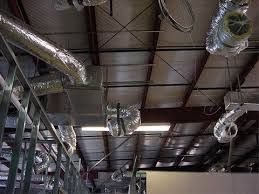
Building Pressure Management for IAQ
Specifications
Details
Building Pressure Management for IAQ by EKG M&E Sdn Bhd
In 2026, the success of an Indoor Air Quality (IAQ) strategy in Kuala Lumpur depends on one invisible factor: Building Pressure. In our tropical climate, failing to maintain Positive Pressure is the primary reason why even "clean" buildings suffer from sudden mold outbreaks and high humidity.
EKG M&E Sdn Bhd specializes in active pressure management, ensuring your building acts as a sealed fortress against the hot, humid, and polluted outdoor air of the city.
1. The "Pressure Barrier" Strategy
To comply with MS 1525:2019 and the JKKP/DOSH ICOP IAQ 2026, a building must be slightly more pressurized than the outdoors.
-
Positive Pressure (The Goal): We aim for a net positive pressure of +5 to +12 Pascals (Pa). This ensures that when someone opens a door, air flows out, preventing humid, unfiltered air from "leaking" in through the building envelope.
-
The Danger of Negative Pressure: If your exhaust fans (restrooms, pantries) pull out more air than your fresh air units supply, the building becomes a "vacuum." This draws moisture through wall cavities and electrical conduits, leading to hidden mold growth and "sweating" walls.
2. VFD-Driven Pressure Control
Maintaining a constant 10 Pa pressure is impossible with fixed-speed fans due to wind gusts and changing occupancy. We utilize Variable Frequency Drives (VFDs) for precision control:
-
Static Pressure Sensors: We install high-sensitivity differential pressure sensors that compare the lobby or office pressure to the outdoor atmospheric pressure.
-
Real-Time Modulation: The sensors talk to the VFDs on your supply and exhaust fans. If the pressure drops (e.g., during a high-traffic lunch hour), the VFD instantly ramps up the supply fan to compensate.
-
Soft-Start Protection: Sudden pressure shifts can pop ceiling tiles or stress door seals. VFDs ensure a smooth ramp-up of pressure, protecting the building’s structural integrity.
3. Psychrometrics and Infiltration Control
In 2026, pressure management is also a "humidity shield." In KL, the outdoor dew point is often higher than your indoor surface temperatures.
| Condition | Mechanical Result | IAQ Impact |
| Correct Positive Pressure | Exfiltration of conditioned air. | Dry walls, no mold, stable humidity. |
| Negative Pressure | Infiltration of 80%+ humidity air. | Condensation on vents, "musty" smells, mold. |
| Wind Load Compensation | VFD adjusts for outdoor gusts. | Consistent air quality regardless of weather. |
4. Mechanical Reliability and FFT Diagnostics
Because your pressure management system must run 24/7 to protect the building, mechanical failure is not an option. Our service includes:
-
Vibration Spectrum Analysis: We perform FFT (Fast Fourier Transform) analysis on your pressure-regulating fans. This allows us to detect "resonance" issues or bearing wear caused by the constant VFD speed adjustments.
-
BMS Integration: We link the pressure data to your BMS. If the building loses its "seal" for more than 15 minutes, an automated alert is sent to our response team.
Why Choose EKG M&E Sdn Bhd?
-
34-Year Legacy: We have spent three decades mastering the unique challenges of the Malaysian climate.
-
Tropical Specialists: We know that a "standard" pressure setup from a temperate country will fail in KL’s 90% humidity; we build for the tropics.
-
Turnkey M&E Support: We handle the Electrical VFD Panels, the Sensor Calibration, and the Air Balancing as a single, accountable partner.
View more about Building Pressure Management for IAQ on main site