
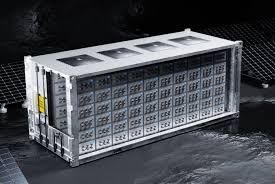
Battery Energy Storage System (BESS) Ventilation
Specifications
Details
BESS Ventilation & Thermal Management by EKG M&E Sdn Bhd
In the rapidly evolving energy landscape of Kuala Lumpur and Selangor, Battery Energy Storage Systems (BESS) are critical for grid stability and renewable integration. However, Lithium-ion batteries (the most common BESS chemistry) are highly sensitive to temperature and prone to Thermal Runaway. Without a robust, code-compliant ventilation and cooling strategy, these systems can suffer from accelerated degradation or, in worst-case scenarios, fire and explosion due to the accumulation of flammable off-gases like hydrogen.
EKG M&E Sdn Bhd provides specialized engineering for BESS environments, ensuring your installation meets NFPA 855 and UL 9540A standards for safety and longevity.
1. Dual-Purpose Ventilation Systems
As an HVAC and Clean Air Specialist, we design BESS ventilation to handle two distinct operational states:
A. Normal Operational Cooling (HVAC)
To maximize battery life and efficiency, the internal temperature must be strictly maintained between 20°C and 25°C.
-
Precision Air Distribution: We use CFD (Computational Fluid Dynamics) modeling to ensure near-perfect air distribution, preventing "hot spots" where a single battery rack might be $5$°C hotter than the rest.
-
VFD Integration: We install Variable Frequency Drives (VFDs) on cooling fans to modulate airflow based on the "C-rate" (charging/discharging intensity). This reduces energy waste during idle periods while providing maximum cooling during peak demand.
B. Emergency Off-Gas Mitigation
If a battery cell fails, it releases a cocktail of flammable gases (Hydrogen, Carbon Monoxide, and Methane).
-
Forced Extraction: We integrate high-speed exhaust fans triggered by Off-Gas Detectors. These fans are designed to dilute the internal atmosphere to below 25% of the Lower Flammability Limit (LFL).
-
Explosion Control: Following NFPA 68/69, we install deflagration vents that provide a "path of least resistance" for pressure to escape, protecting the structural integrity of the container.
2. Cooling Technologies: Air vs. Liquid
We select the cooling medium based on your energy density and site conditions:
| Technology | Best For | EKG M&E Implementation |
| Forced Air Cooling | Smaller/Medium BESS | Uses precision ductwork and high-static fans to push cool air through battery racks. |
| Indirect Liquid Cooling | High-Density Utility Scale | Circulates coolant through "Cold Plates" in direct contact with battery modules for 30% better heat removal. |
| Hybrid Systems | Critical Infrastructure | Combines liquid cooling for the batteries with air ventilation for the Power Conversion System (PCS) and inverters. |
3. The EKG M&E Compliance Checklist
Working with EKG M&E ensures your BESS installation is "Permit-Ready" for Malaysian authorities (JKKP/DOSH/Bomba):
-
Hazard Mitigation Analysis (HMA): We provide the required technical documentation proving that your ventilation can handle a "Maximum Credible Release" of gas.
-
Filtration for Tropical Humidity: In Malaysia, high humidity can lead to "Condensation" on DC busbars. We integrate industrial-grade dehumidification and filtration to keep the internal air dry and clean.
-
Structural Vent Sizing: We calculate the exact burst pressure and surface area required for Deflagration Panels, ensuring they vent safely away from pedestrian paths or adjacent units.
Why Choose EKG M&E Sdn Bhd?
-
Turnkey MEP Integration: We don't just install fans; we manage the entire Electrical, Fire Protection, and Mechanical synchronization of your BESS.
-
Local Expertise: Based in Kuala Lumpur, we understand the challenges of maintaining $25$°C setpoints in a $34$°C ambient environment.
-
Advanced Diagnostics: We offer Vibration Analysis for high-speed cooling fans and Thermal Imaging of battery racks to identify early signs of cell failure.
View more about Battery Energy Storage System (BESS) Ventilation on main site